


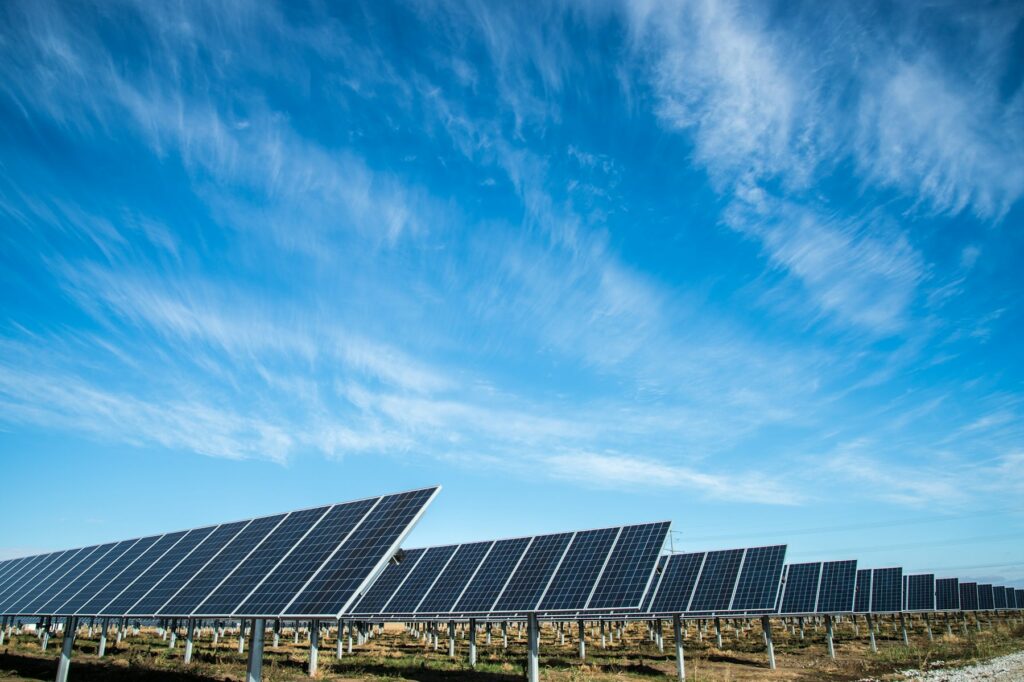
Les énergies renouvelables apparaissent rapidement comme une solution clé aux défis énergétiques pressants de l’Afrique, offrant une voie durable vers le développement et la croissance économique. Doté de vastes ressources naturelles, le continent est sur le point d’exploiter l’énergie solaire, éolienne, hydroélectrique et géothermique pour répondre à sa demande énergétique croissante tout en atténuant les impacts environnementaux.
Énergie solaire
L’Afrique est dotée d’abondantes ressources solaires et reçoit certains des niveaux d’ensoleillement les plus élevés au monde. Cela fait de l’énergie solaire une option particulièrement prometteuse. Des pays comme le Kenya, l’Afrique du Sud et le Maroc ouvrent la voie avec des projets solaires à grande échelle. Le complexe marocain de Noor Ouarzazate, l’une des plus grandes centrales solaires à concentration au monde, illustre le potentiel du continent. De plus, les solutions solaires décentralisées, telles que les systèmes solaires domestiques et les mini-réseaux, apportent de l'électricité aux zones reculées et hors réseau, améliorant ainsi la qualité de vie et les opportunités économiques.
Énergie éolienne
L’énergie éolienne gagne également du terrain, en particulier dans les pays où les conditions éoliennes sont favorables. Le programme d’approvisionnement des producteurs indépendants d’énergie renouvelable (REIPPPP) d’Afrique du Sud a réussi à attirer d’importants investissements dans l’énergie éolienne, contribuant ainsi au mix énergétique renouvelable du pays. En Afrique de l’Est, le projet éolien du lac Turkana au Kenya, le plus grand d’Afrique, constitue un développement historique, fournissant une part substantielle de l’électricité du pays.
Hydroélectricité et géothermie
L’hydroélectricité est une source d’énergie de longue date en Afrique, avec des pays comme l’Éthiopie et la Zambie tirant parti de leurs réseaux fluviaux. Le barrage Grand Renaissance d’Éthiopie, une fois pleinement opérationnel, devrait changer la donne en matière d’approvisionnement électrique régional. L'énergie géothermique, en particulier dans la vallée du Grand Rift, offre une autre ressource renouvelable fiable. Le Kenya est leader dans ce secteur, avec ses centrales géothermiques d'Olkaria fournissant un approvisionnement énergétique stable.
Défis et opportunités
Malgré ces promesses, l’expansion des énergies renouvelables en Afrique se heurte à des défis, notamment en matière de financement, d’infrastructures et d’obstacles politiques. Cependant, les partenariats internationaux, les investissements et les progrès technologiques surmontent progressivement ces obstacles. Des organisations comme la Banque africaine de développement jouent un rôle crucial dans le financement et le soutien des projets renouvelables à travers le continent.
Conclusion
Les énergies renouvelables représentent une opportunité de transformation pour l’Afrique, promettant de fournir une énergie propre, abordable et fiable. En capitalisant sur ses ressources naturelles, l’Afrique peut se forger un avenir énergétique durable, favorisant la croissance économique et améliorant le bien-être de ses populations. Alors que les investissements et les innovations continuent d’affluer, le continent est au bord d’une révolution énergétique.